
Most people in Baltimore know the name “Eutaw” because of the downtown street by that name. In the nineteenth century, there were several places that shared the name, enough to warrant some disambiguation. Eutaw Farm, located in what is now Herring Run Park in Northeast Baltimore City, was the location of an house known as Eutaw, as well as a mill known as the Eutaw Mill. These are the various “Eutaws” that the Herring Run Archaeology Project has explored since 2014.
Elsewhere in the city, there are more Eutaws: in 1817, a section of Gibson Street was expanded to a width of sixty-six feet to create Eutaw Place, a broad, Champs-Elysees-inspired boulevard that became an elite address in the city’s Bolton Hill neighborhood. Later, a hotel called Eutaw House was located on the corner of Eutaw and Baltimore Streets.
All of these places and structures were named in honor of the Revolutionary War Battle of Eutaw Springs, which took place in 1781 in South Carolina.
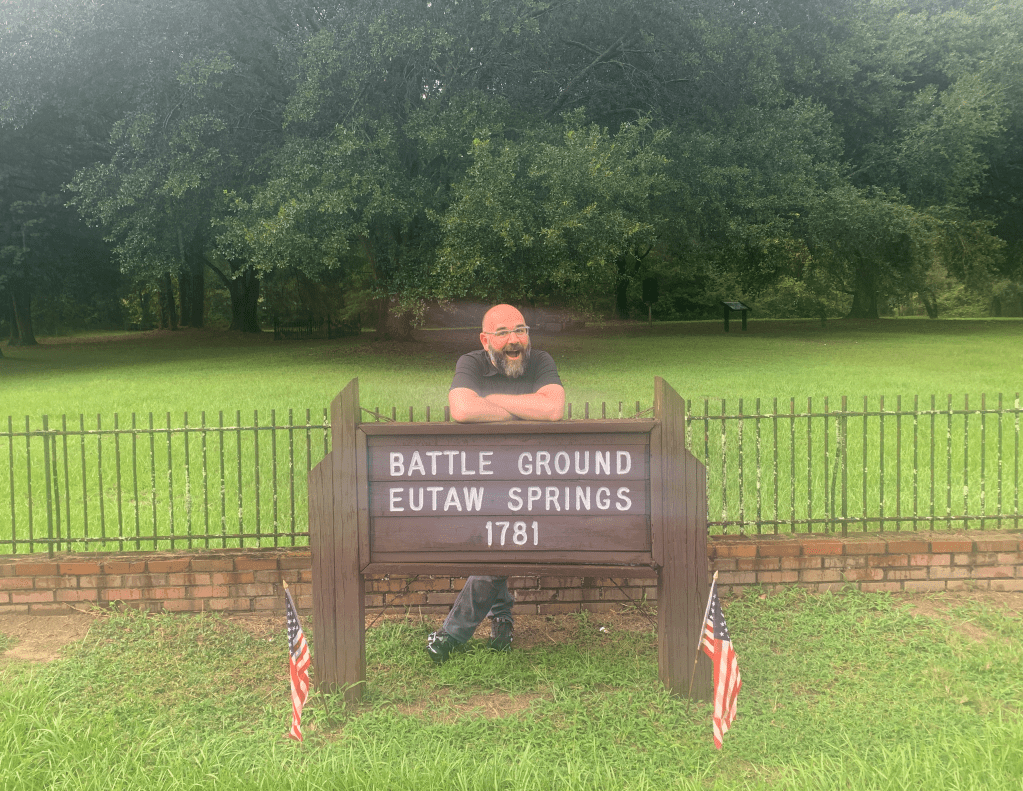
Several socially and politically prominent Marylanders, including John Eager Howard, namesake of Maryland’s Howard County, fought in the battle. The outcome of the fighting at Eutaw Springs was uncertain, with both the British and Americans claiming victory at its conclusion. Otho Holland Williams, leading the 6th Maryland Regiment, advanced and broke the British line, forcing them to fall back several miles and allowing the Continental Army to gain control of a British Camp. To the extent that the Americans achieved a victory, Otho Holland Williams contributed to that victory.
Otho Holland Williams married a woman named Mary (called “Polly”) Smith, the daughter of William Smith, a merchant, real estate investor, and politician who purchased a house and flour mill on the Herring Run, near Baltimore, in 1779. It appears Smith named this property Eutaw in honor of his new son-in-law’s achievements during the Revolution.
The name Eutaw applied to the entire 315-acre property, the house, and the grist mill. Although the property is variously referred to as “Eutaw,” “Eutaw Manor,” “The Eutaw Estate,” and “Eutaw Farm,” we’ll discuss the entire property as “Eutaw” and the house as “Eutaw House.” Eutaw was not a plantation; the farming that occurred there was on a relatively small scale. William Smith owned large farming operations in other parts of Baltimore County and in Harford County, as well as a townhouse in the city of Baltimore from which he ran his business and shipping affairs. It appears he viewed Eutaw as more of a country retreat, where he could live as a gentleman of leisure, or at least lay claim to that way of life. During Smith’s ownership, Eutaw was a diverse venture, where he kept thoroughbred horses, hogs, a mill, and orchards that appear to have been used more for personal enjoyment than for profit. Advertisements for the lease or sale of the property in the mid-nineteenth century mention arable land, market gardens, the property’s suitability for dairy farming, a lime quarry, and lime kiln on the property.
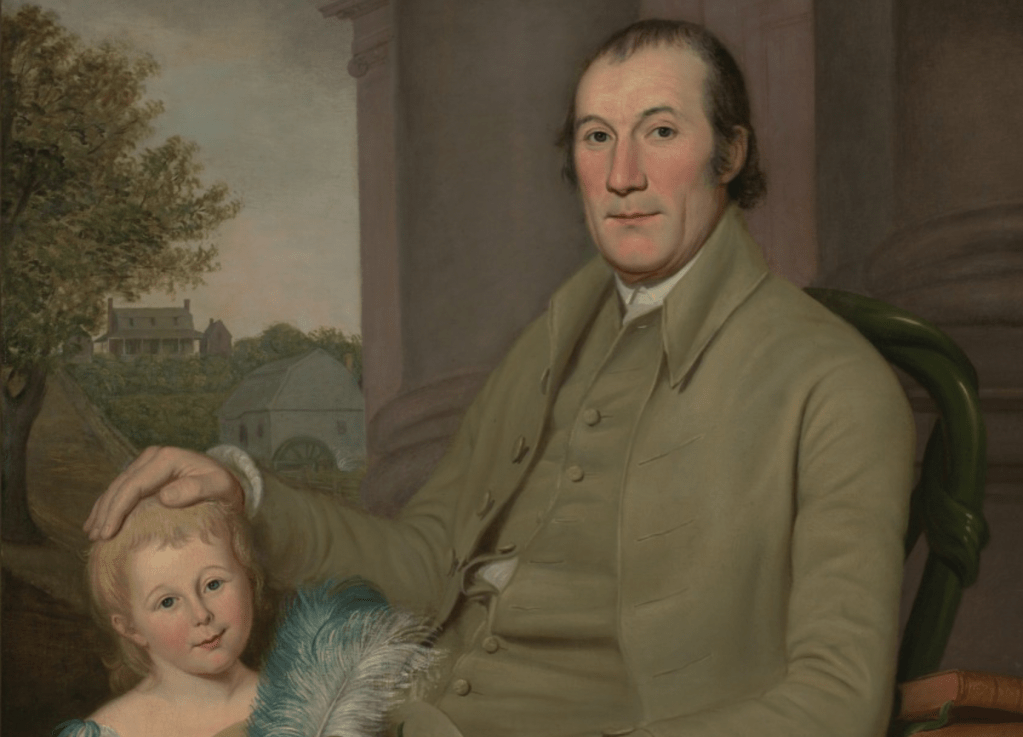
The house and a portion of the grounds, including the grist mill and orchards, are depicted in the background of a portrait of William Smith and his grandson painted by Charles Willson Peale in 1788.
Click here for a brief history of the site!
 The Herring Run Archaeology Project